Saturday, November 7, 2015

I Wish Every Week Was "Culture Week"

This week was "Culture Week" for high school students. During this week, community members and elders came into the school to teach students traditional and practical skills. Our regular class schedule was put on hold so that students could complete several projects and have lots of time to interact with the elders. An intensive like this has not happened in the school for a long time, so myself and the other high school teachers didn't quite know what to expect or how to plan. Overall, it was a great success with some wonderful things being made and lots of positive experiences for the elders, students and teachers. This week was absolutely my favorite week of my teaching experience here thus far. 
Here are some photos from the week:

The week began with elders talking with students about why their culture, and listening to those who know it, is important. They told some stories about the old ways, gave some advice on what to do if you are lost in the woods and reminded students of Yup'ik values. These values include being welcoming to everyone and helping take care of everyone in the village. 

After listening to some stories, the students split into groups of boys and girls. Traditionally, the women and girls do certain jobs and the men and boys do certain jobs. We honored this tradition and spent most of the week in separate groups. 

The girls began their week by cutting fabric to make qaspeqs (kuspuks) which are traditional over shirts worn by many Alaska native groups. 


The elder women cut the fabric for the qaspeqs from memory, without using any patterns. They instructed the students to watch carefully so they can learn to do the same. 


After cutting the fabric, it was time to sew. Some girls hand sewed parts of their qaspeqs, but most used the machines. 


Final fittings!


After mostly watching the first day, the girls became confident seamstresses as the week went on.


The girls also spent time beading. Some made jewelry and others beaded designs onto leather, traditionally called skin sewing. 


I have done some beading before, but not at the same level of difficulty that my students were capable of. A couple of students very patiently taught me a new bracelet pattern. One of my favorite parts of this week was seeing how proud students were when they were sharing their knowledge with me. 


I'm thankful that my mom taught me some basic sewing and beading skills so I could sometimes keep up with the skilled ladies around me. I was able to make a couple pairs of fleece "thank you socks" for the elders. Unlike them, I was very dependent on my paper pattern. 


One of my favorite photos from the week.  Great grandma and great granddaughter making gifts for each other. 


The boys also had a busy and productive week. They made fish traps out of willows, uluaqs (curved blades used for cutting meat), manaqing (ice fishing) sticks and carved spoons and bowls. 


Preparing the willows for the fish trap.


Learning how to assemble the trap. 


Using modern tools to make traditional bowls. 


On our final day, we made moose soup! The moose meat was donated by our principal. The girls used uluaqs to cut the meat and vegetables. 


Busy group of ladies finishing projects. 


We made huge pot of moose soup. There were still leftovers after the entire high school had some. The rest was given to a family that lost an elder on Tuesday. The man who passed was the Uppa (grandpa) of several of my students. It is a Yup'ik practice that when someone dies, the body stays in the home for a week before the burial. During this week, the village visits and says their goodbyes. The family is not allowed to work, cook or clean during this week so the village brings them food and helps them with chores. 


On Friday afternoon, we had an assembly where the high school students shared their hard work with the rest of the school. 


The girls looked beautiful in their qaspeqs! 


Our assembly ended with Yuraq---Yup'ik dancing and drumming. 


It is going to be tough going back to "normal teaching" on Monday, but I'm hoping to incorporate some more activities into my lessons that the elders can help with. They have a very powerful presence when they are in the school. The high school is planning to have more culture intensives in the winter and spring. 

Today was the first snow in Tuluksak! Although it will probably melt, it was nice to see. There were lots of kids out trying to sled by the school. I am looking forward to more snow, and the ground freezing so the muddy conditions will be gone for a while. 

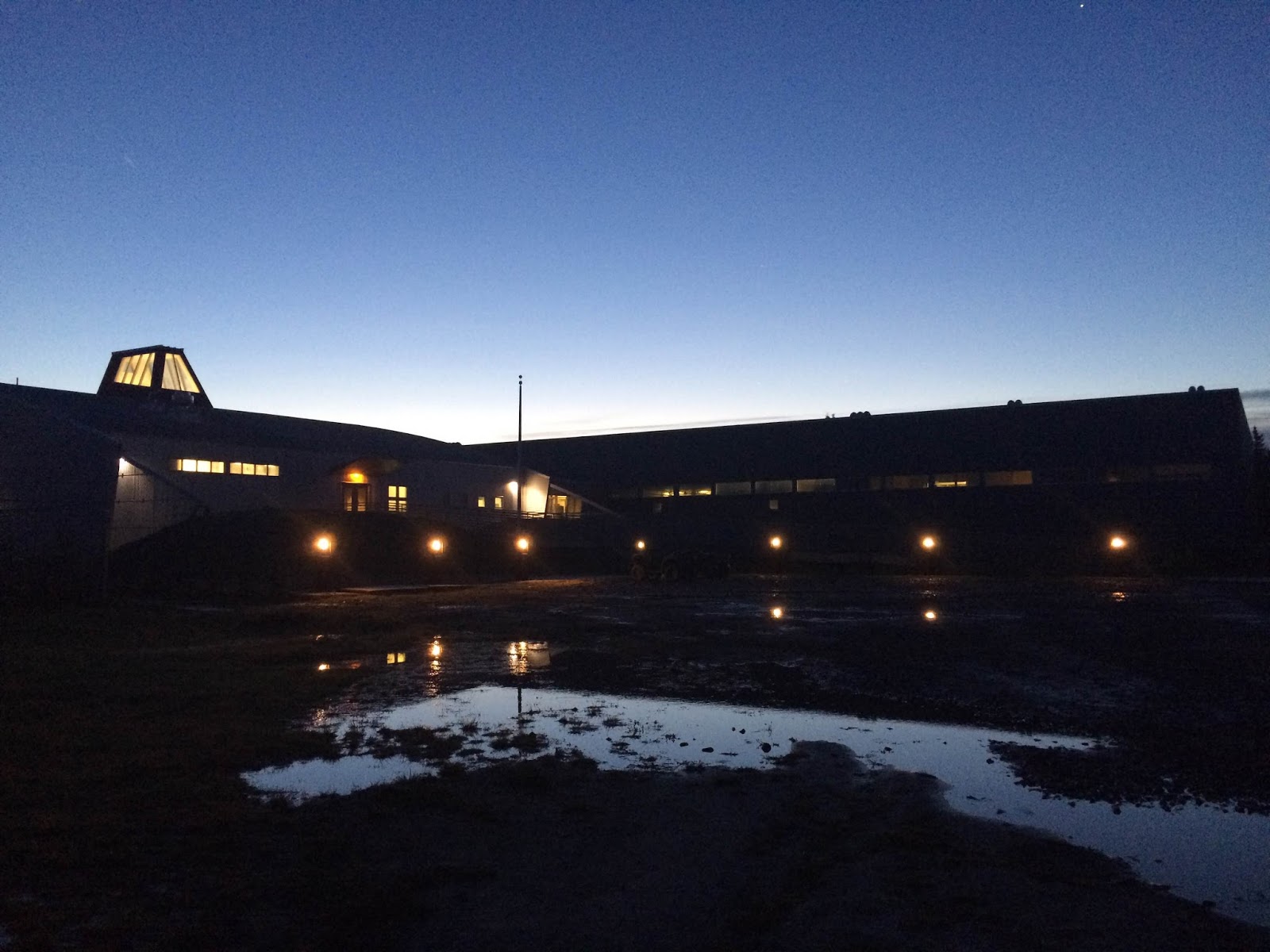
Snowy school


Birkie is happy it finally snowed too. We had a great sunny and snowy walk.


With the snow, comes the worry that days with running water are possibly ending soon. I have a LOT of water stored, but also have a system ready if I need to melt and filter snow this winter :)

Saturday, October 24, 2015

Water, "Witchcraft" and Western Ways

Water

Today was a school day.....and a Saturday. Water complications on Thursday resulted in school being cancelled after first period, and a make-up day today. Lack of water also caused a late start last Friday. There are several factors that have contributed to water problems thus far including clogged pipes, leaks and poor welds, but the most common issue has been the individual in charge of the water being unreliable. I don't know for sure if the cause of this unreliability is kass'aq hatred, laziness, lack of sobriety, or a combination of these, but I can speculate that when the temperature lowers, not having water flowing through the pipes regularly will cause some serious problems. Last year, the school and teacher housing were without water for 6 weeks, but life carried on with honey buckets and bottled water being flown in. This year we are not allowed to have school if there is no water, so some school employees are a bit anxious thinking about how a lengthly school closure in the winter might impact our contract days and summer.  

"Witchcraft"

Our Superintendent was in the village this week visiting classrooms and meeting with community members. At a school board meeting,  Tuluksak Native Council (TNC) members voiced their concerns about the amount of alcohol and crime that has been present in the village in recent weeks. They said "it has never been this bad." The State Troopers were here twice this week taking people to jail, unfortunately including a former student. It is my belief that there is only so much that policing can do against systemic problems. 

Attendance was also discussed at this meeting. This week was better for attendance in the high school than last week, but it was still very low. Adults in the village really want there to be a school basketball team, but they will not wake up in time to send their kids to school so that they are eligible to play on the team. Last year there was not enough eligible students to have a basketball team.  People in the village decided the teachers were to blame for this, not the parents who weren't sending their kids to school. Teachers are bracing for a similar response this year. 

This "blame game" is a real problem for school/community relations. Another concern discussed at the meeting was brought up by the local Pastor. He stated that teachers at the school were condoning students playing with Ouija boards and the game "Charlie Charlie" (using pencils to talk to ghosts). This is obviously false, but it is a rumor that is circulating through the village and is problematic because many people here believe that these games are very real and very satanic. The belief in these games is serious enough that the Pastor claimed they were to blame for a series of suicides that has occurred recently in coastal villages. 

Western Ways

Recently, I have found myself having to actively work at being understanding of some of the attitudes and practices I encounter in the village. I cannot understand what it is to be Yup'ik or to have grown up in the village, so I am trying to withhold judgement when I experience things I find unpleasant. There are many people here who are kind and welcoming. There are others who hate all white people and make that known. One employee at the post office will not even acknowledge me or get my packages if I am the only one there. She said she was  "tired of being interrupted" (by kass'aqs.) 

The TNC has put a $20 bounty on all stray dogs. I knew that this happens in the village, but knowing is different than hearing. My co-worker witnessed a brutal shooting of a dog right in front of the school. I was told that even dogs with collars that are tied outside houses are not safe during this time, so I no longer put Birkie outside. I understand that population control is necessary. What bothers me is that these dogs are not wild native animals. They were originally brought here by people, and irresponsible ownership allowed their numbers to grow. Some people in the village keep them as pets, but others throw rocks at them and shoot them for fun. I try to remind myself that is it my Western values that taught me to see dogs as pets, but at times I can't help but feel that this treatment of animals in unethical. 


Good Stuff 

As bummed as I was to have Saturday school, I really enjoyed spending time with the 10 students who showed up today. We spent the day watching documentaries, coloring decorations for the "Anit-Bullying Door Contest," making paper airplanes and eating snacks :) The days like today spent with students make all the challenges and chaos manageable. 

All classrooms in the school had to decorate their doors with a Halloween theme showing a "safe school" because October is Anti-Bullying month.

I am proud to say that a student came up with the "Stop a (skele) Ton of Bullying" pun. Still a work in progress, but I really like our door. 
Next week are parent-teacher conferences and a Halloween carnival at school. I am mostly looking forward to both. 


Monday, October 12, 2015

"October is Hard"

Many people told me "October is hard" when it comes to living and teaching in the villages. It's hard because Permanent Fund Dividends mean many students leave for extended periods of time to shop in Bethel or Anchorage. It's hard because alcohol follows the money into the village. It's hard because student motivation dwindles as the effects of that alcohol disrupts their lives. It's hard because weather can be cold and rainy which limits access to the outside world. For me, I've found it hard because things I felt optimistic about at the beginning of the year seem to be unravelling. 

Last week, a good day for attendance in the high school would be when 20 of 39 students showed up. Most days, we had about 15 students. It's frustrating that there is a disconnect between students wanting to do well in school, and actually showing up. Some of the brightest students in our school showed up one or two days last week and on that day wanted to make up all the work they had missed, which is just not a possibility in most classes. I really enjoy my students as people. They are kind, adventurous and funny. Unfortunately, very few of them place any value on education. Or if they do, their parents don't. 

When I first arrived in Tuluksak, I was told by people that this is a "broken" village, and that it is the "most dysfunctional place in Alaska." I don't think I would describe quite like that, but I can understand how it earned those reputations. Even people who have lived here most of their lives recognize the dysfunction. The Yup'ik language teacher at my school will proudly say how all of her children so far have "gotten out," meaning they have moved out of the village. Some of my students have the same goal. Those who want to stay, are not able to articulate what they see themselves doing in the future. 

It isn't very difficult to trace the roots of this dysfunction. A systemic elimination of culture by the government, regulations that made subsistence practices more difficult, mandated schooling that ended seasonal transient lifestyles, the introduction of drugs and alcohol, availability of modern media that depicts Native Alaskan lifestyles as backwards and no job opportunities to replace the lost hunting and gathering "jobs." What is difficult is to try and think of a viable plan that could improve life in the village. I believe one of the first steps would be eliminating "dominant culture" schools and the non-native teachers who occupy them. 

I don't see any changes happening soon, so I will continue to do the best I can to provide my students with the most relevant education I can. 


Some Good and Not-so-Good Things

I like to end on a high note, so I'll start with the not so good.

Two weeks ago our school had a lock down. We have not yet had a drill practicing lock down procedures, so I'm thankful for the practice I had at North Star. There was a man in the village, likely intoxicated, who was going around shooting at people with a shotgun. At one point he came uncomfortably close to the school. My class and I sat in the corner of the classroom in the dark for about 45 minutes until the State Troopers arrived in the village to assist the Village Police Officers (VPOs) in apprehending the man. Thankfully no one in the village was hit/injured.

Yesterday I was supposed to fly to Anchorage to go to a conference on building resiliency in students. I was really excited; had my sub plans ready, dog sitter ready, big empty bag to fill with Anchorage groceries ready. A"series of unfortunate events" resulted in me still being in Tuluksak. First, our plane was on weather hold so we missed our first flight out of Bethel. Then when the planes were able to fly, the one sent to Tuluksak did not have enough seats for everyone. By the time the plane came back for the remaining 3 of us and we got to Bethel, the last flight to Anchorage for the day, that our colleagues had made it on, was overbooked.  So the three of us spent about a half hour in Bethel airports then booked a last minute charter flight back to Tuluksak. The ultimate bummer.

But! There has been some good stuff happening in this crazy part of the world. I am the student council advisor (at least until our last remaining members become ineligible--a story for another post!). Student council has been helping with planning "Fun Friday" activities where the high school spends time doing "fun" stuff Friday afternoons in an attempt to encourage students to attend. So far, student council has made pizza and cookies for the rest of the high school to enjoy while we watch  movies. I really like getting to spend time with students outside of academic settings, and some  have been really helpful when planning these activities. Here's some photos:

Pizza Chefs!


Student Council made the dough the night before and then all students at Fun Friday chose their toppings.


They turned out delicious! 


We ended up making over a hundred chocolate chip cookies.


After just one burnt batch figuring out how to use the kitchen's ovens, the rest came out perfect!


Our clean up crew did a great job too!


We had lots of cookies, so we wrapped up some with thank you cards and gave them to school employees.


I have my Leadership class make flyers for Student Council meetings. I enjoyed the "simplicity" of this one :)


Here are some more photos of October in Tuluksak:

This is the school's main mode of transportation for people and supplies. Unfortunately, vandalism (especially in the form of rock throwing) is a common past time among children in the village, and the school's vehicles are tantalizing targets. 


My cozy house :) Also occasionally the victim of the rock-throwers


My "yard." Complete with view of fuel/water holding tanks and other teacher housing. 


The Alaskan sky does some beautiful things. I have yet to wake up to see the Aurora, but I plan to next time its around.


Going to school on a clear morning a few weeks ago. Mornings are much darker now. 


One good thing to come out of my failed trip to Anchorage were some pictures from the bush plane. The Kusko (Kuskokwim River) was exceptionally still on this flight. 


The sun was setting on the way back from my brief visit in Bethel. It lit up the delta nicely. 


Sunday, September 20, 2015

Why "I" Shouldn't Be Here/Village Life II

When I say "I shouldn't be here" I don't mean myself personally. I mean that I believe the structure of schooling like the one I am a product of has no place in the indigenous cultures of rural Alaska. The children here need a place where they can learn skills that are applicable to life in the village, general life skills and cultural knowledge that they can teach to future generations.
The "curriculum" mandated by the district and state is both inaccessible and irrelevant to my students. I say "curriculum" with quotes because my curriculum consists of shelves of textbooks written 5 or 6 grade levels above where my students are at as readers, and vague Alaska History/Government standards.
When I was in high school my peers and I loved to make the arguments "when are we ever going to use calculus?" or "when are we ever going to use world history?" These questions are valid for students here who are likely going to remain in the village for most of their lives. Skills like carpentry, small engine repair, welding, cooking, family science and sewing would be extremely applicable and beneficial for them. Unfortunately there are currently no shop or home economics teachers at my school because "white is right" education says that core academic content is more important.
There are students that may go out and get some kind of post-secondary schooling or have jobs outside the village, but they are not the majority. Preparing students for those kinds of futures is also equating "success" with leaving the village which is a dangerous idea to encourage as it has already resulted in loss of Yupik culture and could, I fear, result in the extinction of the village in just a few generations.
I am currently reading a book called "Conflicting Landscapes: American Schooling/Alaska Natives" which was written to try to document some of what I've described, but the authors are able to do it more eloquently, so I'd like to share an excerpt here. This is what one author realized on Kodiak Island in the 1970s:

"What I was about to witness, however, was the forced secularization of Alaskan Native society. At first I understood this only as a local tension between the purveyors of secular modernism and the local traditional people. But gradually I came to see this struggle as global, a planetary process in which the ancient, spiritual worldview would be suppressed and overwhelmed by a global, literate and highly sophisticated technological society. The instrument by which the latter imposed itself on the former would be the public school. The destruction of the old by the new would be done in the name of "Education."

Having recognized this, I try to facilitate some damage control in my classroom. I try to give my students opportunities to teach me about the area and I do my best to localize content I am mandated to teach. In Sociology we look at subsistence practices of other indigenous groups around the world.  In Government we look at where hunting regulations come from and have talked a lot about the meaning of the word "sovereignty." There is a limit to my ability to make my classes relevant though because I am an outsider. Unfortunately, many of my students are unaware of vital parts of their own histories because many of their parents were in the "boarding school generation" where they were taught that their culture and language were wrong and schools tried to systematically eliminate culture. There are only a few elders left in the village who possess some of these stories and skills and when they are gone so is that part of the culture.

All that being said, I have recognized that I am a part of a very detrimental cultural interface, but I am still really enjoying my time with my students. They continue to impress me with their natural knowledge, and their brave and caring spirits. It's grouse season now and I had one student come up to me today on her four wheeler with her siblings to proudly show me the grouse she had shot :)


Village Life II

We've had water pretty consistently the last few weeks which has been really nice. I'm still adjusting to the pace and expectations of the village, but I enjoy it.

Mail/Transportation
Yesterday I went to the Post Office, but it was closed. Not because it was outside of their operating hours, just because whoever was working got bored and decided to close early. You have to plan ahead for everything in the village, but at the same time you can't really count on anything :) As the weather changes, the reliability of different services will become even more spotty. Last Monday, the teachers were supposed to fly to Akiachak for a district-wide inservice, but planes were grounded due to weather, so instead we had an inservice via video conference. When I order things from Amazon, sometimes they arrive quickly, and sometimes they are held in Bethel until there is enough stuff for the hovercraft (yes, HOVERCRAFT) to make a trip upriver. The idea that a hovercraft delivers mail to a village that mostly doesn't have running water is a dichotomy that still astounds me.

The Permanent Fund
Many people here rely on different kinds of government assistance to take care of their families. One source of income unique to Alaska that is outside of the "government assistance" category is the Alaska Permanent Fund. This is a big chunk of money that was invested after oil was discovered on the North Slope. The fund is managed by a special corporation that is regulated by Alaska's state constitution. Every year, every Alaskan (who has been a resident of the state for at least 2 years) receives a sizable check from the fund. The amount of this dividend varies from year to year. The amount of this year's dividend will be announced by Governor Walker tomorrow but is speculated to be over $2,000. For large families, this can equate to a very sizable amount of money. One teacher at my school said that when the dividends come, "all hell breaks loose."

Alcohol (again)
Bootleggers anticipate the dividends coming to the village and prepare appropriately.  Bootleggers get booze in Bethel and then bring it up river, usually by boat. "Rich and Rare" is the drink of choice in the village. A small bottle that might cost $10-$15 in the lower 48 can be bootlegged for upwards of $100 in the village where alcohol is illegal. The effects of alcoholism can be heard at night in the village, and seen the next day at school on the faces of kids that didn't have a place to sleep the night before because their parents were drinking. Unfortunately, some of my high schoolers not only partake in drinking but have been exposed to the profitability of bootlegging.

Seasons
With Alaska being on the frontline of climate change, its hard to compare climates between here and home, but I'd say Tuluksak is about a month ahead of Brimson. Trees are losing their leaves and mornings are frosty. Here are more photos of my walks around the village:

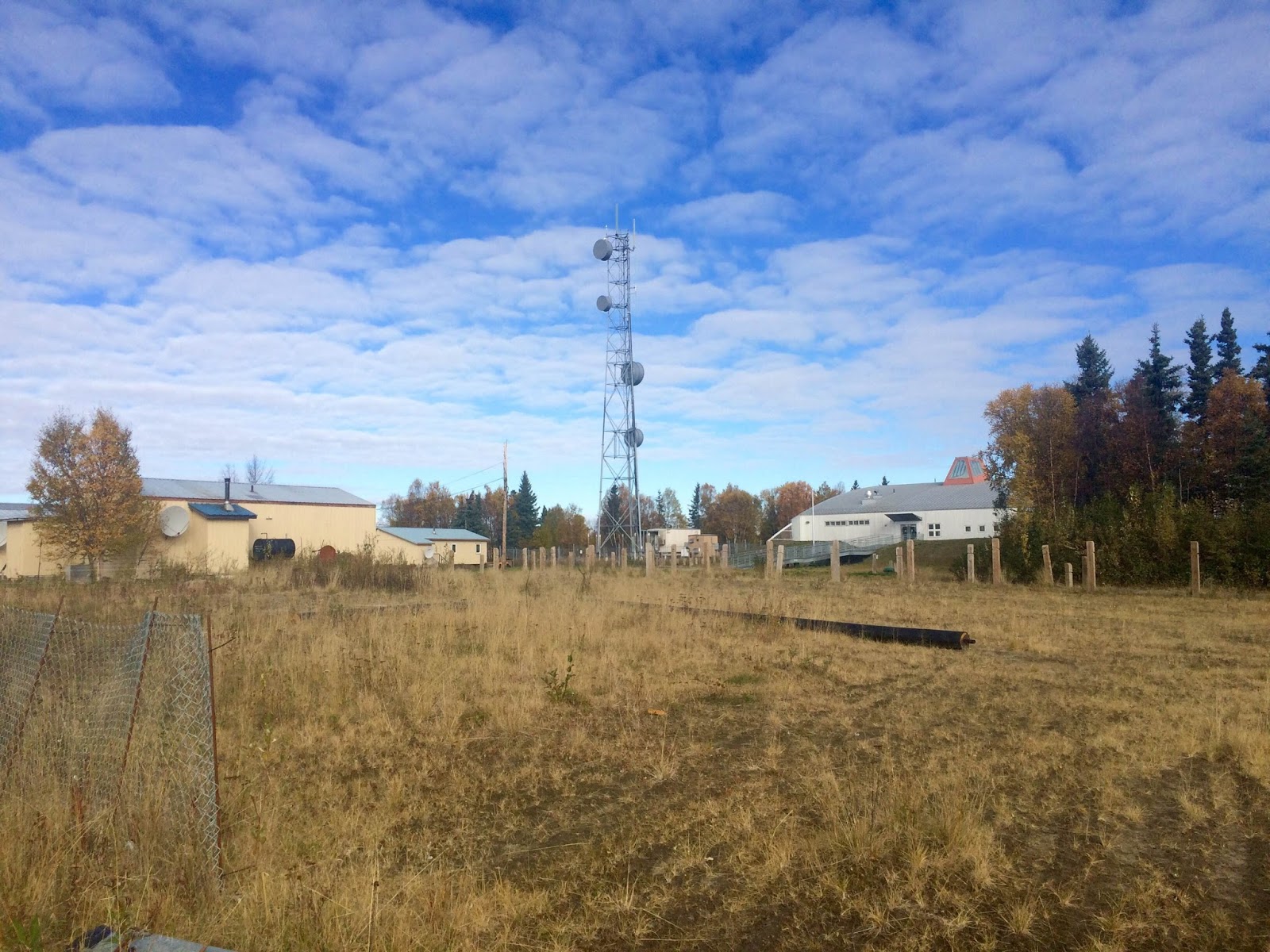
Teacher Housing on the left, cellphone/internet tower center, school on the right. My house is a duplex, it is the one in the background directly to the left of the tower


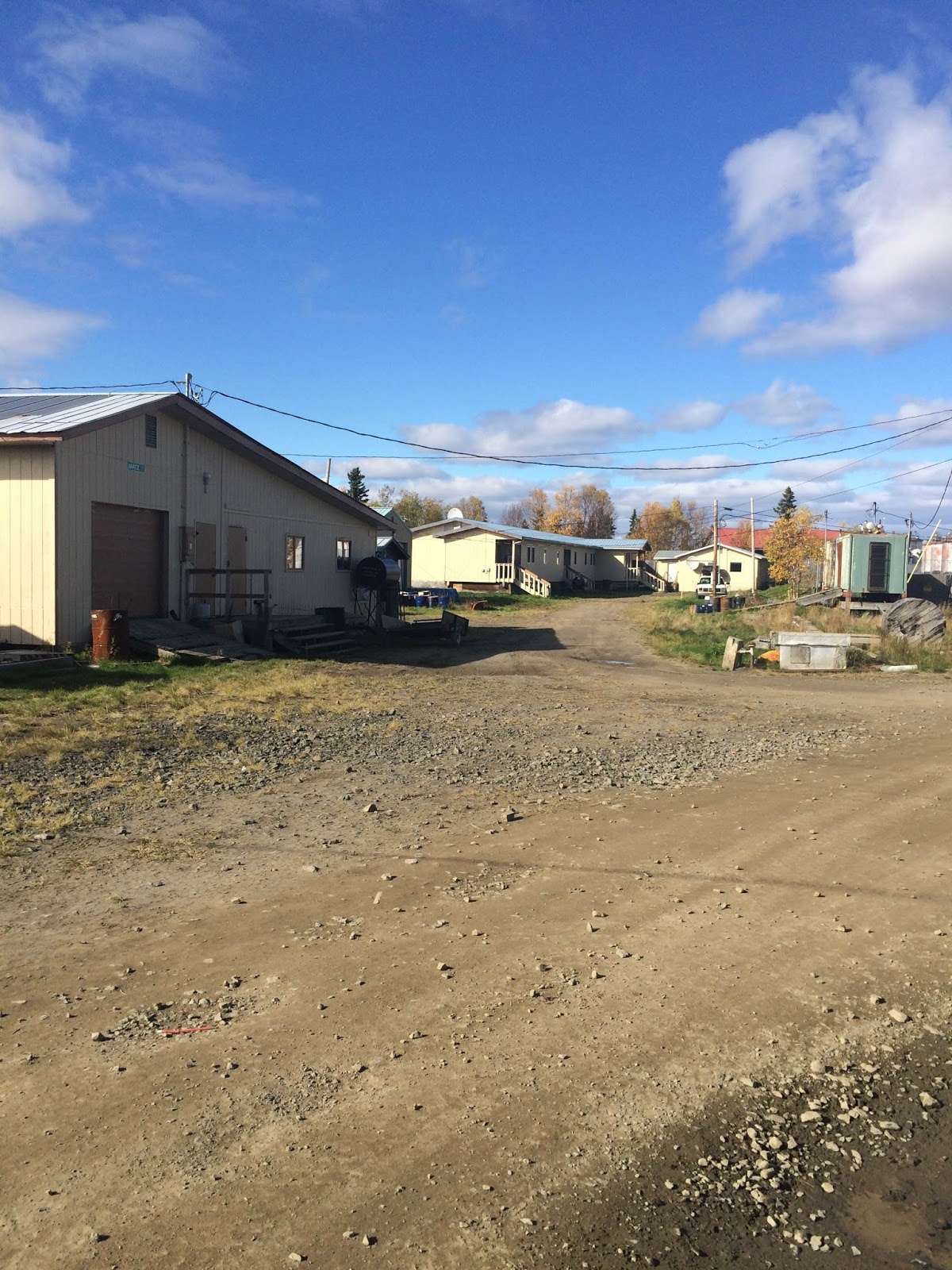
More teacher housing, and the school garage


An area that at one time was some kind of athletic field, but now is being used to store the soil being removed from the new "honey bucket" dumping ground


This is the area right behind the school. Left: leaning basketball hoop, center: upright jungle gym, right: toppled jungle gym that was pushed over by someone, or a group of someones, over the summer


 The fallen jungle gym.....


This sign leans up against the side of my house marking the "high water mark" and "recommended building elevation." I have yet to ask anyone about it, because I figure I won't like any answer I get....thankfully the river has been low lately


The old cemetery, there is another one on the other side of the village


On the weekends, Birkie and I like to walk out the airport. Its about a 40 minute walk from my house. I carry some defensive tools while walking. We have seen lots of signs of different critters but thankfully have yet to have a live encounter with any


The airport road is my favorite place in the village


My bed is Birkie's favorite spot in the village. She likes to spy on other dogs. I can usually see her in the window when I come home from school :)